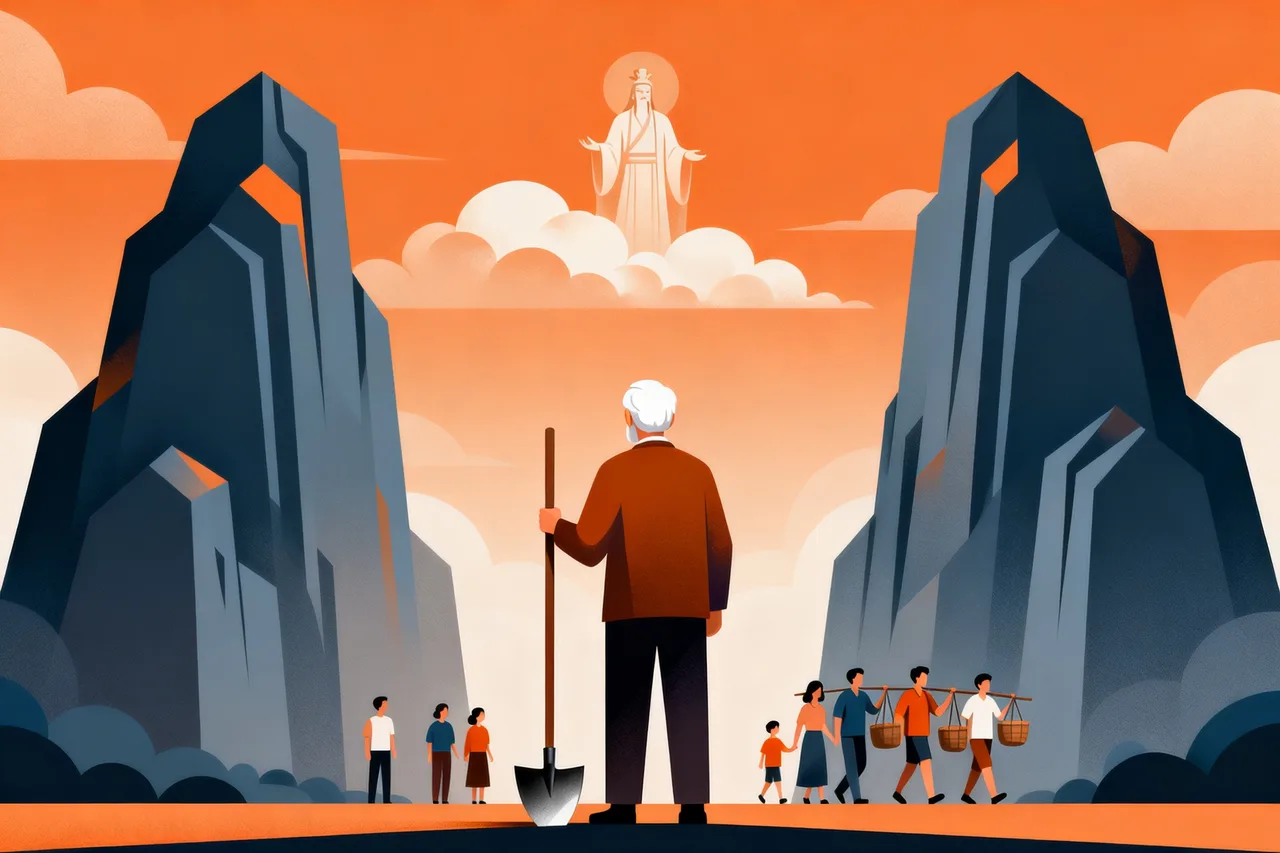
教学目标
- 语言能力:学生能正确认读并运用 remind, bit, silly, instead of, neither...nor 等核心词汇与句型;能通过 skimming 和 scanning 获取故事的主要情节和关键信息。
- 文化意识:理解愚公移山所蕴含的“不畏艰难、坚持不懈”的中国传统精神,并能用英文简单转述故事寓意。
- 思维品质:通过分析人物观点(愚公、智叟、天神),比较不同的解决问题方式,培养批判性思维。
- 学习能力:借助故事山(Story Mountain)图示梳理故事脉络,提升结构化阅读与复述能力。
教学重难点
- 重点:运用故事山梳理愚公移山的情节发展;理解并正确使用 remind, instead of, neither...nor 等进行观点表达的句式。
- 难点:深入理解故事背后的文化内涵,并能用英文简单评价愚公的做法,而非仅停留在字面翻译。
教学过程
Step 1 Pre-reading:激活已知,引入主题(5 mins)
- Show and talk
教师播放一段《愚公移山》动画片段(30秒,无字幕),提问:
T: What’s the name of this old man in the video?
Ss: Yu Gong.
T: What do you know about the story? Tell your partner in Chinese or simple English.
学生两人一组快速分享已知情节。 - Predict from the title
T: Today we read “An old man tried to move the mountains.” Why did he try? What happened next? Let’s find out.
Step 2 While-reading:分层任务,推进理解(20 mins)
Task 1:快速读,搭骨架(Skimming)
- 学生用 60 秒快速浏览 3a 课文,找出故事中的四个关键人物(Yu Gong, his family, the old man called “Zhi Sou”, the gods)。
- 教师在黑板贴上人物图片(或简笔画),学生说出人物名称,教师顺势板书。
Task 2:分段细读,填故事山(Scanning & Story Mountain)
教师发放导学单,上面画有故事山图形(Opening — Build-up — Problem — Resolution — Ending)。
- 段落1-2(Opening & Build-up):学生自读,回答引导问题:
Q1: What were the mountains like? (big and high)
Q2: How old was Yu Gong? (over 90 years old)
Q3: What did Yu Gong decide to do? (move the mountains)
完成故事山的“开端”和“发展”部分。 - 段落3(Problem & Debate):同桌分角色读出 Yu Gong 和 Zhi Sou 的对话,注意语气。读后讨论:
T: What did Zhi Sou think of Yu Gong’s work? (It’s impossible and silly.)
T: How did Yu Gong reply? (The mountains won’t grow, but my family can live and grow, so we can go on.)
重点处理语言点:remind sb. that...; instead of giving up; neither...nor...
学生在语境中猜测词义,教师点拨 instead of 后接 doing,neither...nor 连接并列成分。 - 段落4(Resolution & Ending):学生找出故事结局,填空:
Finally, a god __________ (move) the mountains away. (答案:asked two gods to move)
学生对结局是否感到意外?为什么?引导学生思考:神话故事中常有神力相助,但核心精神是人自身的不放弃。
Task 3:再读全文,标注承接连词
学生圈出文中时间顺序的连接词(like: once upon a time, as soon as, finally),体会故事叙述的连贯性。
Step 3 Post-reading:角色评价与意义探究(12 mins)
- 圈内圈外(Inside-Outside Circle)讨论
学生分为内外两圈,面对面站立,讨论问题:
Q1: Do you think Yu Gong was clever or silly? Why?
Q2: What do you learn from the story? Try to use “instead of” or “neither...nor” in your answer.
每讨论 90 秒,外圈学生向右移动一位,交换伙伴,交换观点。鼓励用英文表达。 - 微写作(Mini-writing)
根据讨论结果,学生独立完成句子补全(2-3句),写在学习单上:
I think Yu Gong was ______ because ______. The story reminds me that ______.
随机抽取 3-4 名学生展示,教师从内容与语言正确性两方面给出口头反馈。
Step 4 Summary & Homework(3 mins)
- 学生根据板书上的故事山,口头复述故事梗概,可借助连接词。
- 布置分层作业:
- 基础:听读课文 3 遍,完成 3b 的句子排序。
- 提升:借助故事山复述故事给家长听,并记录家长的评语(中文亦可)。
- 挑战:换个角度改写结局 —— 假如没有神来帮助,愚公一家最后能成功吗?用 3-4 英句话写出来,下节课分享。
板书设计
Unit 6  An old man tried to move the mountains.
   Story Mountain
         ★ Ending
        (gods helped)
   ↗               ↘
Problem(debate)
Zhi Sou: silly    Yu Gong: keep on
   ↗               ↘
Opening: mountains high & big
核心句型:
• This story reminds us that...
• Instead of giving up, Yu Gong...
• Neither he nor his family would stop.
设计意图
本设计避免将故事课上成翻译课,通过故事山将叙事情节结构化,帮助中等生快速把握脉络。读中活动设计有梯度:从快读找人物到细读填图,再到聚焦连接词,符合认知规律。读后的讨论和微写作直接衔接中考口语表达与书面表达要求,用“instead of”等短语约束输出,让学生有支架可依。文化意识的渗透通过评价愚公的做法而非简单贴标签实现,学生可表达个性看法,体现新课标“加深对中华文化的理解”的理念。板书以图示为主,留有学生生成的句子位置,真实课堂中可根据学生回答及时补充。
